
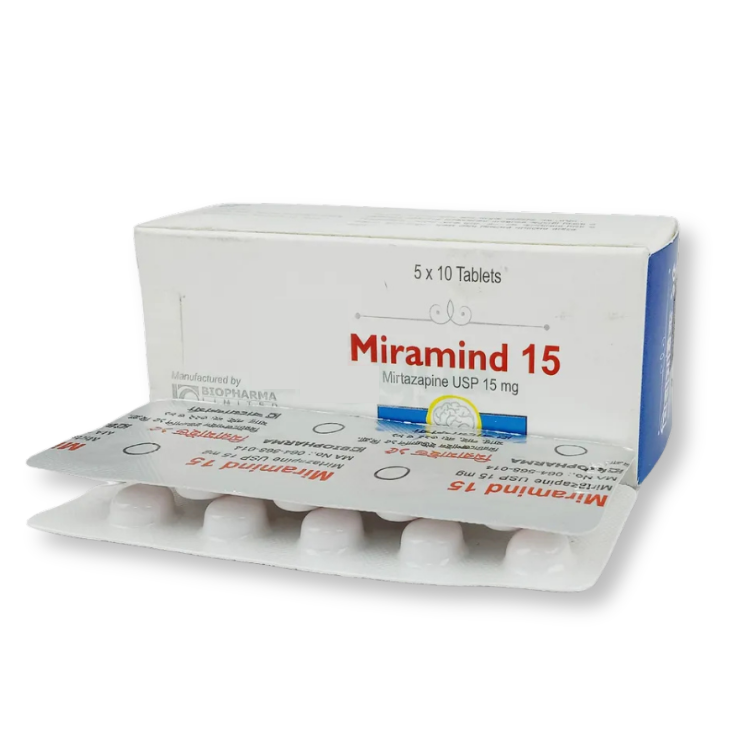
Description
Product Overview Mirtazapine 15 mg is a prescription antidepressant belonging to the tetracyclic class (noradrenergic and specific serotonergic antidepressant – NaSSA). It is primarily used for the treatment of major depressive disorder (episodes of depression) in adults. It may also help with associated symptoms such as insomnia, anxiety, and loss of appetite. Mirtazapine works by enhancing the activity of norepinephrine and serotonin in the brain through antagonism of central alpha-2 adrenergic receptors and blockade of certain serotonin receptors (5-HT2 and 5-HT3).
Important Warning Antidepressants like mirtazapine may increase the risk of suicidal thoughts and behavior, especially in children, teenagers, and young adults (under 24 years) during the first few months of treatment or dose changes. Close monitoring by a doctor is essential—report any new or worsening mood changes, agitation, or unusual behavior immediately. Mirtazapine is not approved for use in children. Risk of serotonin syndrome (potentially life-threatening) when combined with certain drugs. Do not stop suddenly—may cause withdrawal symptoms (e.g., dizziness, nausea, agitation). Always follow your doctor’s instructions precisely.
Dosage and Administration
- Adults: Starting dose is usually 15 mg once daily, preferably at bedtime due to sedating effects. May increase every 1–2 weeks to 30–45 mg/day based on response.
- Maintenance: Continue for at least 6 months after symptoms improve to prevent relapse.
- Elderly or patients with renal/hepatic impairment: Lower starting dose and careful titration due to reduced clearance and higher risk of side effects.
- Take with or without food. Swallow whole with water.
- Full effect may take 2–4 weeks; do not discontinue abruptly—taper gradually under medical supervision.
Common Side Effects
- Increased appetite and weight gain
- Drowsiness, sedation, or dizziness (stronger at lower doses like 15 mg)
- Dry mouth or constipation
- Fatigue or headache
Serious side effects (seek immediate medical help): Suicidal thoughts, serotonin syndrome (agitation, hallucinations, rapid heartbeat, fever), severe allergic reactions (rash, swelling, difficulty breathing), seizures, abnormal bleeding, or mania/hypomania.
Precautions and Contraindications
- Do not use if you have: Hypersensitivity to mirtazapine, or concurrent/recent (within 14 days) use of MAO inhibitors (e.g., phenelzine, selegiline—risk of severe reactions).
- Avoid alcohol and other CNS depressants (e.g., opioids, benzodiazepines)—increases drowsiness and risk of severe side effects.
- Caution in patients with history of seizures, bipolar disorder, liver/kidney impairment, heart conditions, or low blood cell counts (may cause agranulocytosis—monitor for fever/sore throat).
- Not recommended during pregnancy (risk to fetus) or breastfeeding (passes into breast milk).
- May impair driving or operating machinery—do not drive if drowsy.
- Monitor for worsening depression or suicidal ideation, especially at start of treatment.
Storage Store at room temperature (20–25°C) in a cool, dry place away from light and moisture. Keep out of reach of children.
Note: This information is for general guidance. Always consult your doctor or pharmacist for personalized advice, and read the patient information leaflet provided with your medication. Mirtazapine should only be used when prescribed.



Reviews
There are no reviews yet.